
Fall Cooking Class with Chef Miguel Larcher
Some seasons call for cozy, and this fall, we decided the answer was dinner. We wanted a place to come in out of the cold and feel comfy, cozy, and well fed.
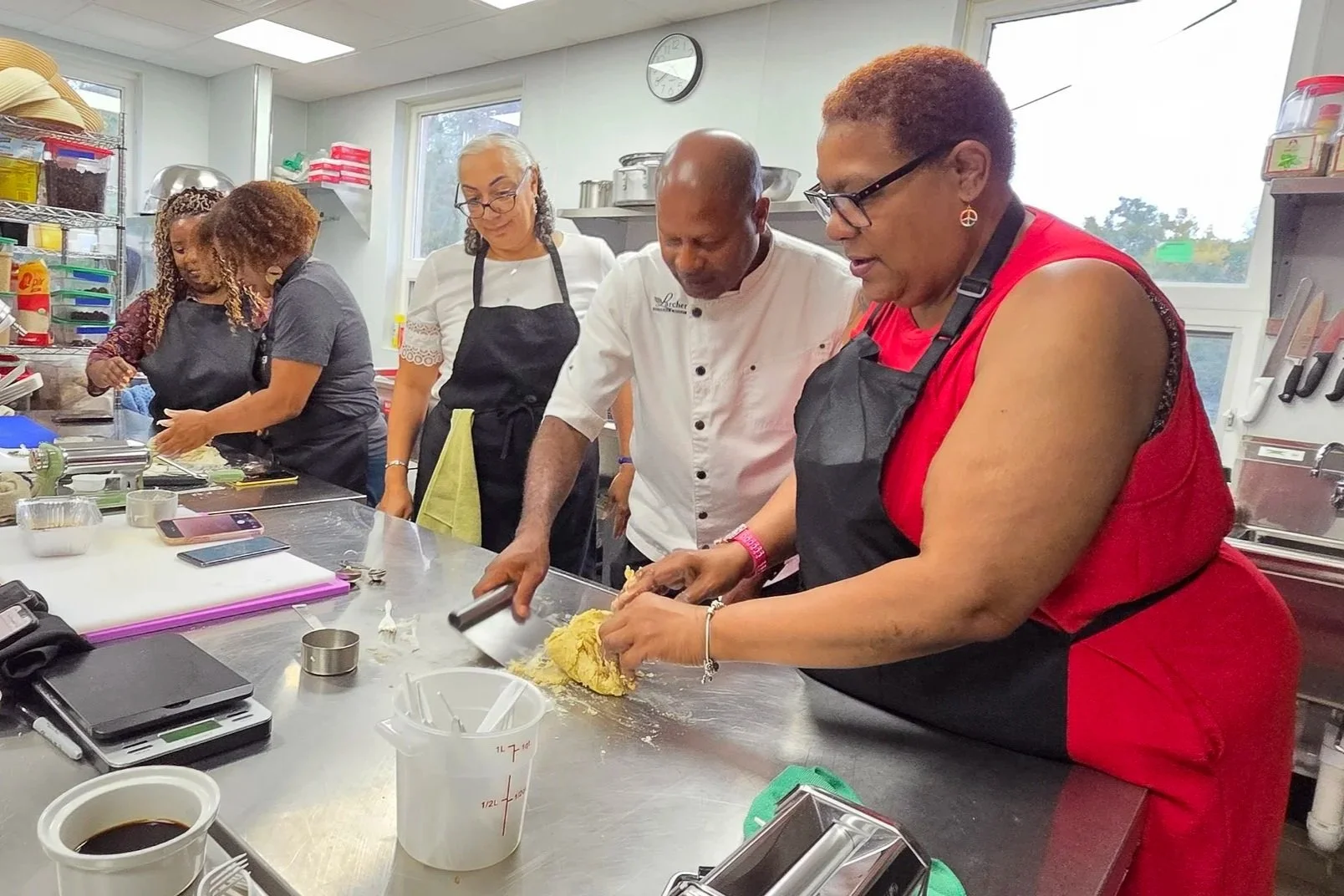
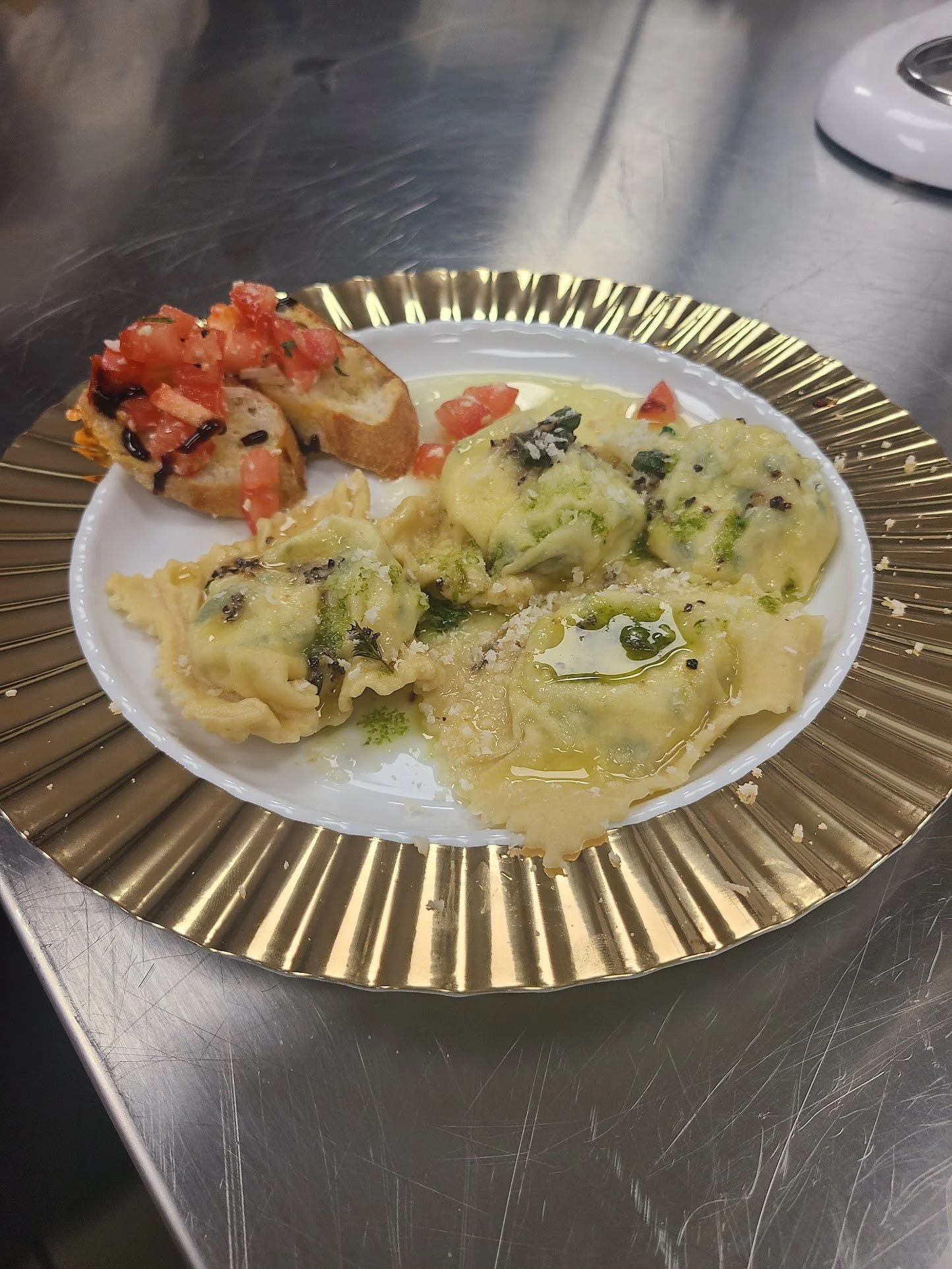
We were celebrating World Mental Health Day and Black Girl Day of Rest, and we spent the evening with Chef Miguel Larcher of Larcher Catering and Bakery, working in teams of two or three. On the menu: bruschetta, ravioli made completely from scratch (so you officially can’t tell us nothing! LOL), and tiramisu.
Two Invitations
Before we picked up a single whisk, we set two invitations for the evening and carried them with us until the last bite.
Set down the pressure to perform. Most of us live in modes: parent/caregiver, romantic partner, professional, leader, the one who keeps everything running. Every one of those comes with pressure to perform and produce, and perfectionism can sneak in and intensify, even when the task is supposed to be fun. Chef Miguel invited us to use our creativity, taste as we went, and adjust everything to our own preferences. There was no single right ravioli, and no role to play. We were just people, together in a kitchen.
Drop into the senses. We also invited the group to cook mindfully: to feel the dough, smell the garlic, hear the music, and turn our attention away from the noise of external demands and expectations and toward what’s happening inside us and between us. What am I noticing? What am I feeling? How am I connecting? What am I savoring?
It’s a small shift, and you can use it anytime you want to claim a little time for yourself, whether that’s an evening with your girls or ten minutes alone with your tea. Step out of the role, set down the pressure to get it right, and come back to your senses.

Practice Being Flexible
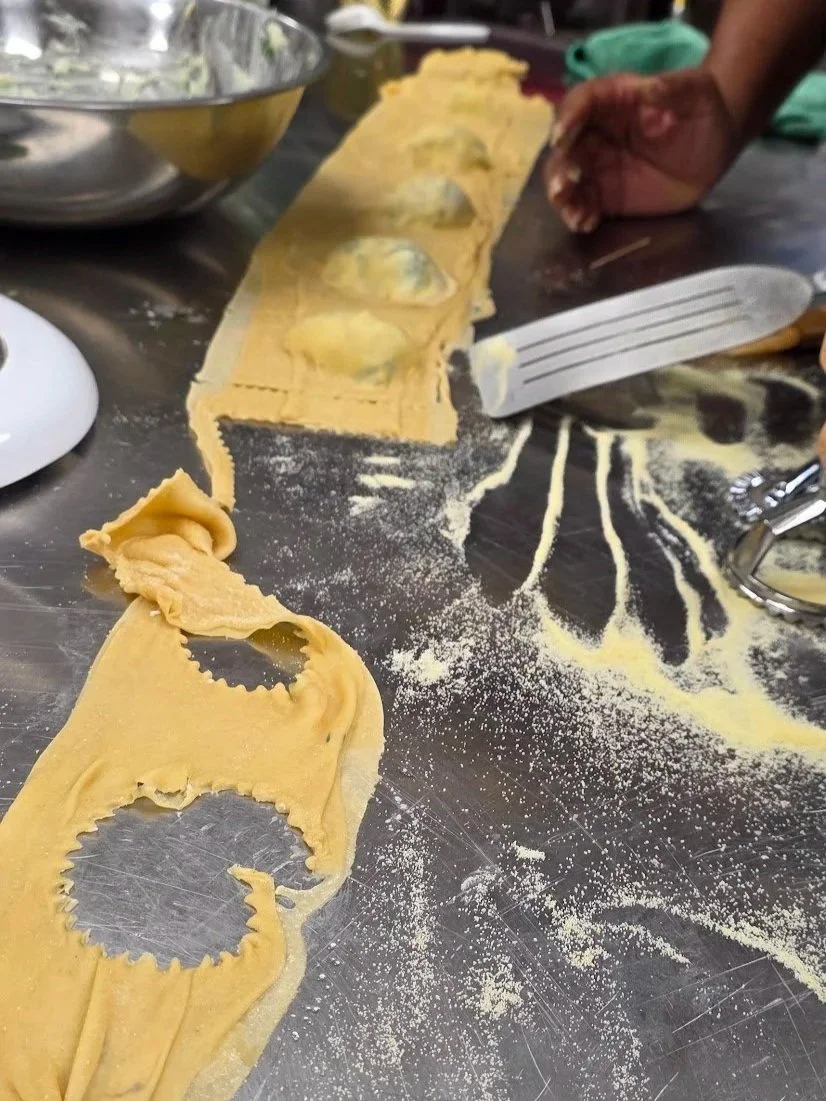
With those two invitations in place, something loosened. There were moments when things went a little sideways, as they do with fresh pasta: dough that won’t act right, water that won’t be rushed to boil, air bubbles with a mind of their own, ravioli with their own ideas about what shape they should take. And instead of taking those moments so seriously, we laughed.
In yoga, we build flexibility in our bodies and our breath. In a kitchen together, we were building a different kind of flexibility, the kind that lives in our nervous systems and in the automatic habits of how we treat ourselves and each other. We got to meet a small, everyday challenge (the pull to rush, to self-criticize, to compare to someone else’s pace or ‘pretty’ pasta), move through it, and find out we were still okay, and still safe.
That matters, because a lot of our tightness and rigidity were learned for good reasons. And some of it sticks around simply because we rarely get a safe place to practice anything different. A low-stakes evening with warm people and a lopsided ravioli is exactly that kind of place.
Many Hands, Lighter Work
Homemade ravioli is laborious. Mixing, kneading, and rolling the dough, feeding it through a hand-crank pasta maker, filling, folding, sealing. Alone, it would have felt like a chore. Several of us have physical challenges that would have made it strenuous or impossible to do on our own. Together, it was the best part of the day.
Because we shared the work, each of us could lean into the part we liked most or felt most skilled at. Some of us took the dough. Some of us took the crank. We switched roles and gave each other breaks. We laughed, we put on music, and we wove conversation and connection right into the labor, so we were being fed by each other while we worked.
So many of us are tired, and not just in our bodies. We’re running low on enjoyment because of how much we carry, and how much of it we carry alone. Doing the same labor in community is a completely different experience. The work gets lighter, the time gets sweeter, and our nervous systems get to take in a nourishing and restorative connection along with the effort.
This is how our ancestors lived, and how most women throughout history have done life: together, with many hands sharing the load. Our current way of carrying so much alone, each household holding its own cooking, caregiving, and worry, isn’t serving our wellbeing. So where can we shift?
That’s a big part of what Black Girl WELLbeing is for. We practice the culture and ways of being we need, and we interrupt the unhelpful defaults our culture has conditioned us to see as the norm. Together we create and practice new norms. An evening of making ravioli together was one small rehearsal.
The Table
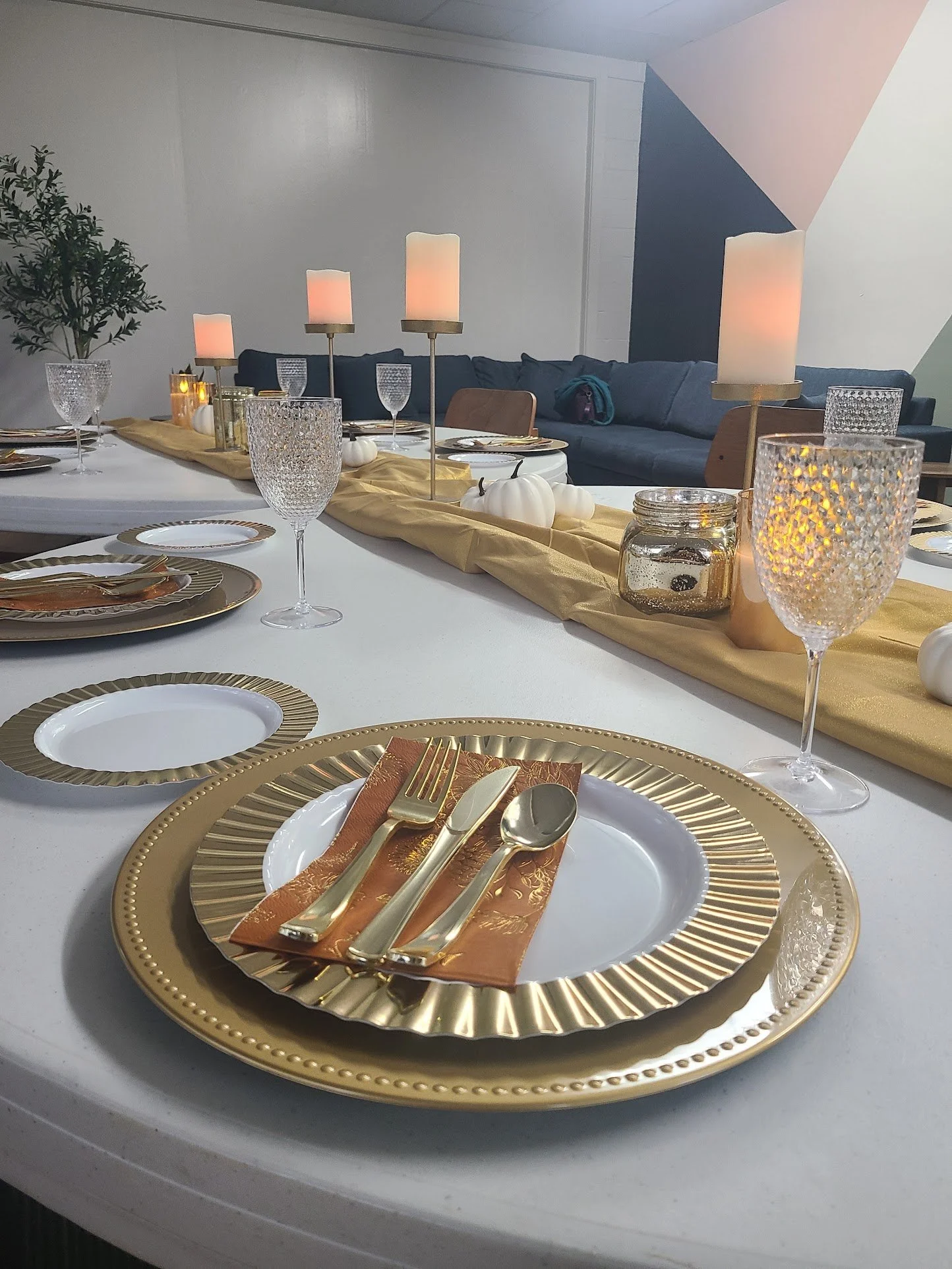
When the cooking was done, we sat down to dinner together at a gorgeous table, set with the kind of tablescaping that makes you want to linger. We ate what we’d made, and it was lovely. Who knew?...Simple ingredients could be so delicious. Simple decorative touches could make us feel special, cared for, and transported to a soft place for our nervous systems.
At some point, one participant noticed something. She had glanced at her phone, and almost instantly the stressors of her week came rushing back. So she put it away. That moment stayed with us, because it’s a real skill. It’s not about running away from life. It’s about knowing when to set things down and when to pick them back up, so our nervous systems have room to recover.
A Comfort and Discomfort Map
Over dinner, we talked about simple steps we can take to care for ourselves this fall. Dr. Mishelle discussed the way our nervous system tries to balance comfort and discomfort. The conversation was inspired by Dr. Anna Lembke’s Dopamine Nation, which explores the balance of pleasure and pain in the brain. (As a trauma therapist, Dr. Mishelle adapts the language a bit. For people who have survived a lot, “healthy pain” can get complicated, so we talk about comfort and discomfort instead, with healthy and unhealthy versions of each.)
Picture a grid with four quadrants:
Unhealthy discomfort: the hardship the world hands us without our asking. There’s already plenty of it.
Healthy discomfort: the stretch we choose, because it helps our lives work and moves us toward what matters.
Unhealthy comfort: the quick dopamine chase. We’ll all visit sometimes, and our brains and bodies will take us there fast and become reliant on it if we haven’t already chosen something else.
Healthy comfort: the intentional kind. Rest, warmth, good food, good company, chosen on purpose.
Draw out the grid and fill it in based on the comforts and discomforts in your life.
For so many of us, the discomfort side of the scale is already heavy. So we sat with two questions: What can we take off our discomfort side? And what can we add to our comfort side? An evening of cooking together did a little of both.
We also asked a harder one: Are we asking a lot of ourselves in the healthy discomfort box without adjusting the other boxes to support that change? Fall is busy, then we roll straight into the holidays, and then we wonder why we’re so depleted. Most of us don’t have an intentional plan for keeping this grid in balance.
One of the easiest ways to add to the comfort side is to savor the simple things. Savoring just means slowing down enough to notice and soak in a good moment while it’s happening. Our brains automatically register the difficult things, sometimes replaying past pains and scanning for future threats. We can be moving so fast and on autopilot that we barely notice and take in the ordinary good things. Research on savoring links the practice to greater well-being. You don’t need a big occasion. You need your senses and a few unhurried minutes.
Some of the women shared the small things that lift their mood: a really good lotion, cozy pajamas, warm slippers. And they pointed out that it doesn’t have to be expensive. A lot of it comes from places like TJ Maxx. Comfort you can afford is comfort you can keep choosing. We can also savor the color of the leaves on a walk or the faces of the people we love, for FREE!
Comfort, chosen on purpose, is not an escape. It’s how we refill.
Carry It With You: Choose one this week.
Option 1: Take one thing off your discomfort side. Maybe it’s a task you can share, delegate, or let go of, or a standard you can loosen.
Option 2: Add one small, intentional comfort to your side, and savor it. Good lotion or a yummy dessert. Put your phone down while you enjoy it.
Option 3: Do the same task you’ve been dreading, but invite someone to do it with you. Put on music.
Option 4: Look at the busy season ahead, holidays included. If you’re stretching in the healthy discomfort box, weighed down by unhealthy discomfort or trying to reduce unhealthy comfort, name 1-3 intentional adjustments you’ll make to your grid to help support your wellbeing.
World Mental Health Day and Black Girl Day of Rest: we did both days proud. We leaned into more of what we think the world needs to be well. We also honored the rest that we as Black women need, remembering that rest isn’t only sleep. It’s also how we move through the world: with ease and creativity, laying down our burdens, and connecting with each other. Cozy on purpose, and together: it’s part of the practice of how we keep each other well. Thank you for BEing here and creating community with us, sis!